
Ten Years In
A gentle reminder that it took a long time to get to this place
Last spring, I spent a few glorious weeks working in solitude at Ernest Hemingway’s final home, a gorgeous house overlooking the Big Wood River in Ketchum, Idaho. It’s a magical place to write and think and work, a writing residency that’s a generous gift from the private community library that owns the home.
Ketchum is one of those places in the American West – there are so many now - where you can see inequity in motion every morning and every evening. A long line of cars snakes into the small town as businesses open for the day, then leaves again when work ends. These are the folks who keep the town running but can’t afford to live in a resort community heavily favored by the wealthy. Some of the commuters live 90 minutes away but find it worth it to make the trek into Sun Valley where pay is better. The valley is a favorite spot of billionaires, including Peter Thiel, and a small enclave that doesn’t have space or affordable housing for many of its workers.
Hemingway himself, a revolutionary American writer but also a genuine celebrity of his time (it’s hard to imagine any writer today having his level of fame and celebrity) was, perhaps unwittingly, part of the beginning of this culture shift in small towns in the West. The Sun Valley ski resort first lured the great writer to Idaho in the 1930s, as part of a campaign to attract celebrities and publicize their visits, in the hope that their presence would draw more tourists. He wrote the majority of his masterpiece “For Whom the Bell Tolls,” at the resort in the fall of 1939.
The tourism campaign worked, in the sense that it got Sun Valley a whole lot of attention. But the divide now in these small towns is untenable for most working-class people, creating commutes, yes, but also a fractured sense of community in some places. Hemingway became part of Ketchum, moving there full time in later years. He died there and is buried in the local cemetery.
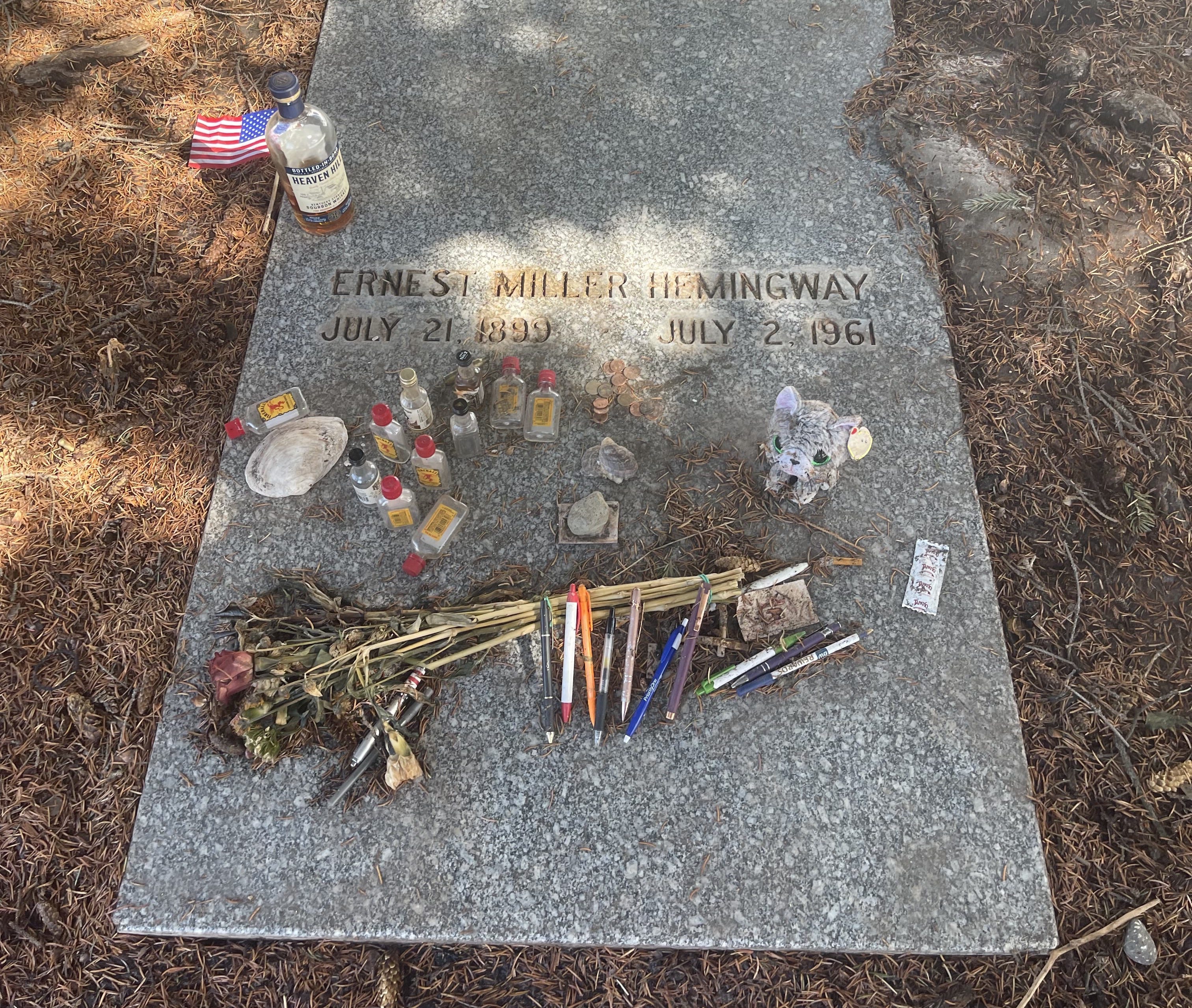
In Sun Valley, though I was mostly writing and wrapping up work on a radio documentary for the BBC, I didn’t get the overwhelming sense of a broken place. Instead, the people involved with the library and the writing residency seem to have built a strong, engaged community. But the long line of cars in and out of town each day was telling.
As part of the residency program, I was asked to give a talk at the library – about my book but I wanted to bring in something more urgent. Living in an increasingly unequal West, it’s clear how economic inequity has fractured our social fabric. There’s also a growing body of evidence that economic inequality leads to authoritarianism. Do you see where this is going?
My talk in Ketchum drew about 100 people to the library, a very good crowd for a small town. We were a few months into the second presidential term of Donald Trump and I spoke mostly about how his administration had all the hallmarks of an authoritarian regime, and how growing inequity in the United States helped get us here. There was some evident horror in the audience as they considered Trump’s authoritarian tendencies, but one question stuck with me.
How did this happen so quickly, he’s only been in office a few months? My response: It didn’t. We are a decade on in Trumpism in America, and in those years that he wasn’t actually the president, his anti-democracy policies were being tested on those of us who live in what many dismiss as “Red States.” Places like Idaho, where severe anti-abortion laws forced a flood of doctors to leave the state entirely. It took 10 years (and more) for the country to get to this place, digging back out won’t be easy.
With that in mind, I’m starting a series of conversations here with some smart folks about the rise of authoritarianism in America. How to survive, what lessons we can draw from other countries, how to avoid drowning in despair and, perhaps most importantly of all, how to build community.
I’ll publish the first interview, with community organizer and writer Garrett Bucks, tomorrow.
Eager to see more …. So glad you are doing this.
🔥🔥🔥